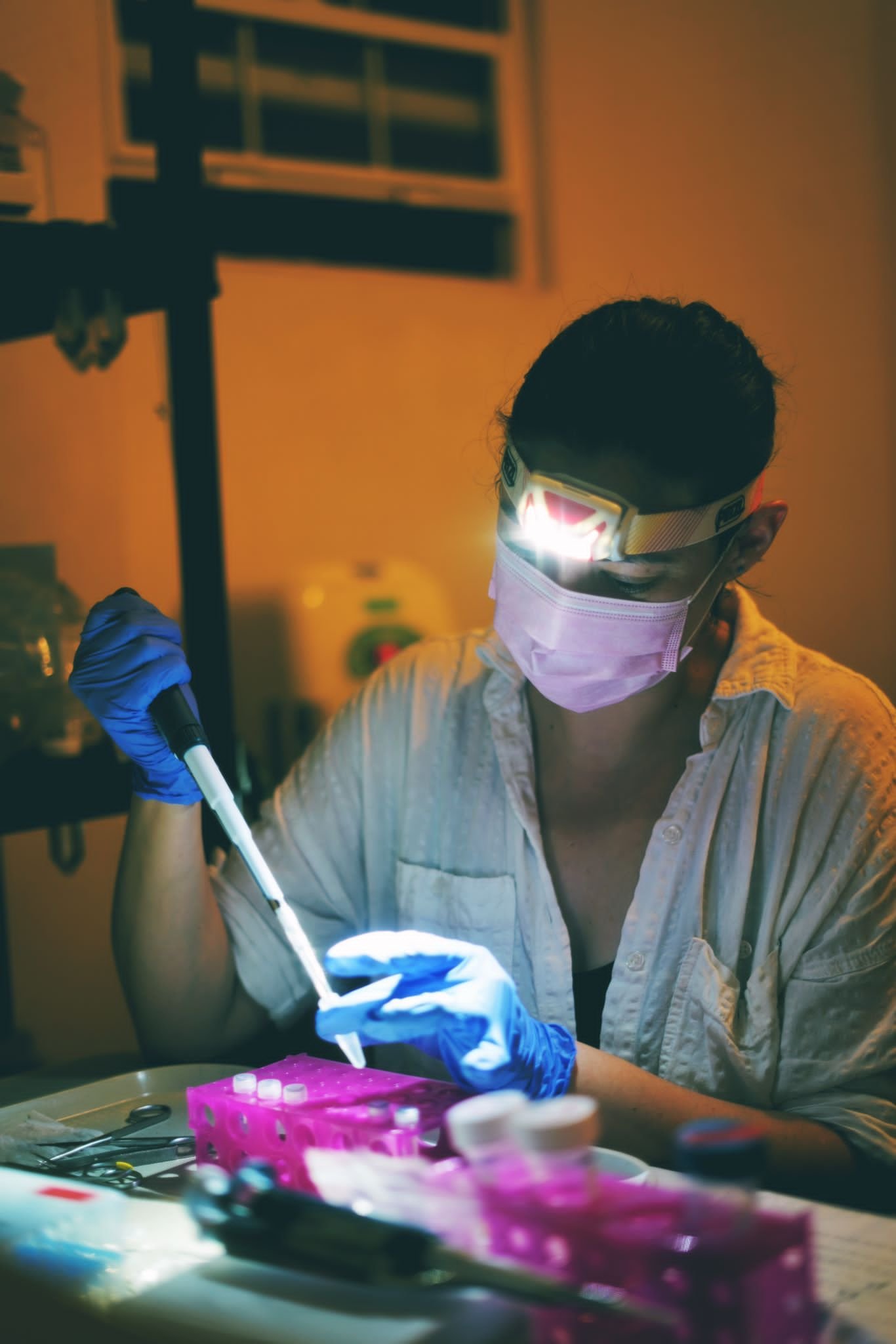
Revealing the fundamental rules of mammalian metabolism by studying organisms that push physiology to its limits.

Biology of Metabolic Resilience

Jasmin Camacho, Ph.D.

Bioinspired health

About me: As an evolutionary biologist, I am interested in exploring extreme mammalian adaptations for insights into organismal features that might become informative targets for repairing and protecting human health. I received my PhD in Harvard's Organismic and Evolutionary Biology Program in the lab of Dr. Arhat Abzhanov and Dr. Clifford Tabin.  I am currently performing research at the Stowers Institute for Medical Research as a Hanna Gray fellow. I am supported by the HHMI, BWF, and NSF.

Research Interests: My research focuses on understanding the origins of adaptations that enhance life—from their single-cell embryonic beginnings to the cultural stories that shape our understanding of these transformative traits. My long-term aim is to uncover the cellular and molecular mechanisms implicated in the adaptations of extraordinary mammals- bats. My current research is focused on nectar bat physiology and cellular metabolism. Understanding bats can help us restore metabolic balance against hyperglycemia, a condition associated with diabetes mellitus, a metabolic disease for which there is no cure.

Inclusive Science

Higher Education Advocacy: As a first-generation Chicana and Indigenous scholar from an underserved low-income community, I understand firsthand the transformative power of education, and I am committed to advocating for equitable access to higher education. I was born and raised in Salinas, California, the hometown of author John Steinbeck, who often depicted the agricultural life and struggles of the region, which haven’t changed much today, and home to one of the most violent gangs in the U.S., the Nuestra Familia. This environment profoundly affected my family as well—my mother dropped out of school and later became entangled in addiction as drugs trafficked by these gangs spread through our community. Despite these harsh realities, I grew up within a tight-knit family and a community rich in culture, strength, and resilience. It was through the strength of these bonds, and a quiet resolve born from the hardships that shaped my life, that I sought education as my way out—a path not just to escape poverty, but to break the cycles of limitation and forge a future rich with possibility. I aim to serve as a role model and mentor to students from diverse backgrounds in their pursuit of higher education. My goal is to inspire others to realize their potential and break the barriers that stand in their way.

I honor my Chicana and Indigenous (Nahua and Otomí) heritage. The word cihuatl (pronounced see-wah-tl) means 'woman' in Nahuatl. It reflects both the strength and cultural identity I bring to my work as a scientist. Integrating this perspective into the lab is part of my commitment to fostering an inclusive research environment that values diversity in thought, experience, and identity. I am active in SACNAS (Society for Advancement of Chicanos/Hispanics and Native Americans in Science), and remain committed to expanding access and opportunity for underrepresented scientists, a commitment shaped by my training at UC Davis, an emerging Hispanic-Serving Institution.